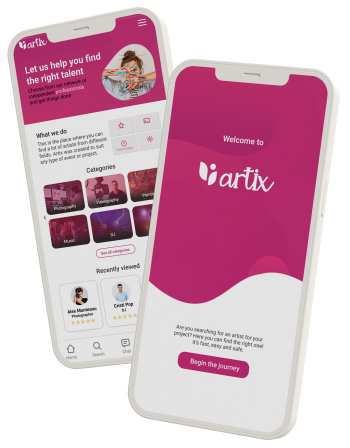
Artix is a project that aims a better communication between artists and art consumers, and also to facilitate the conclusion of contracted services.
The problem:
Many artists, especially those at the beginning of their career, face difficulties in finding projects / clients. On the other hand, many people who need artistic services for various projects have difficulties in finding artists.
The solution:
My goal was to create an app that helps people find artists who offer their services in different fields.
UX Research
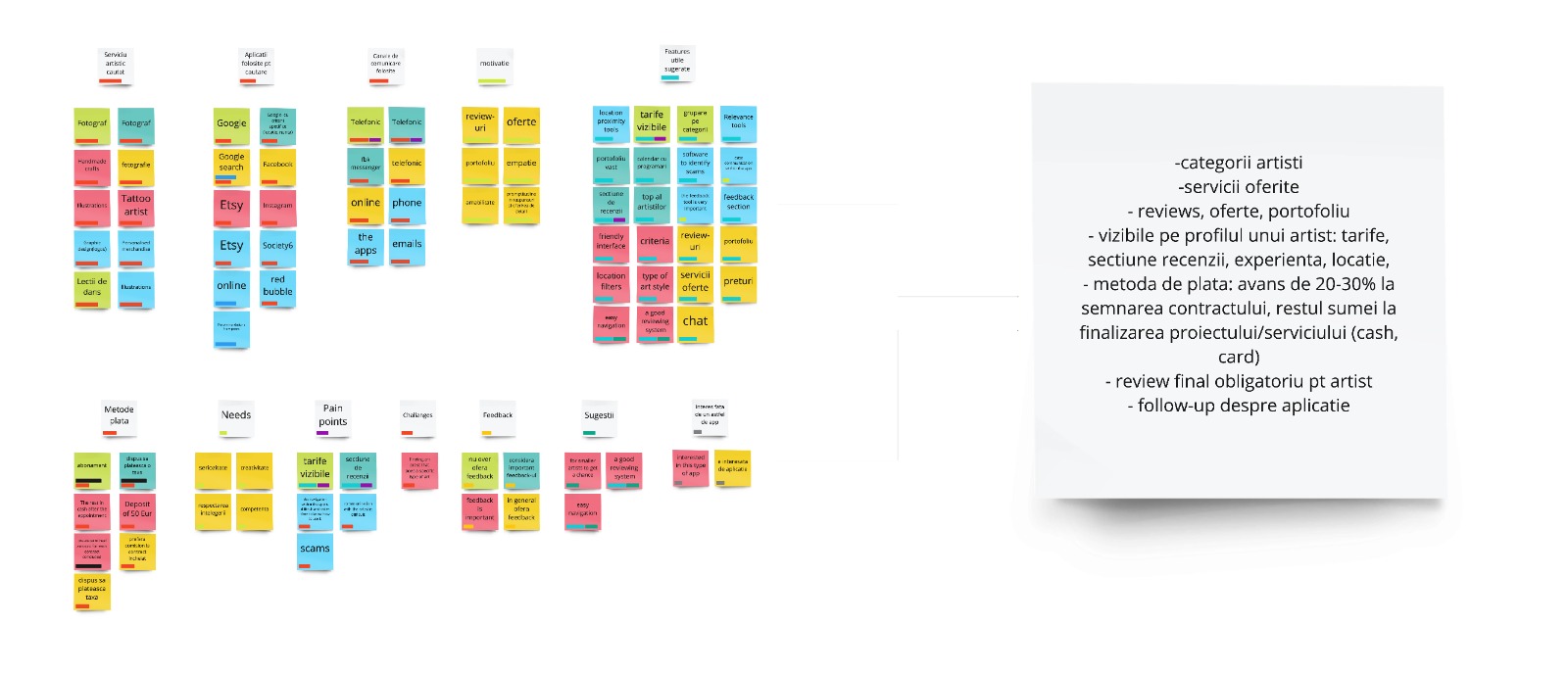
In the define stage, I conducted user research, including developing personas, user stories, and empathy maps. I explored the context behind artists who are looking for projects and tried to understand how the interaction with the art consumers works. Further, I conducted an exploratory research study to find out the pain-points and needs on both sides. Then I analyzed the data through affinity mapping, created two empathy maps and two personas to gather more informations.
Research goals
• To find out if there is interest in using an application where artists can offer their services and get in touch with potential clients. • To understand artists experience of being hired by clients to provide a service and also clients’ experiences of hiring an artist. • To find out what are the difficulties encountered by artists in finding projects / clients.
• What are the user’s needs, pain-points and challenges?
• Determine what are the most used ways by which artist finds paid projects.
• To find out from users what features would find useful in this app. • Find out how we can help artists get in touch with clients. • To find out if users are willing to pay a commission for each concluded contract, or a monthly fee.
• To understand the attitude of artists regarding the sale of their services online.
Previous
Next
Interviews & Surveys
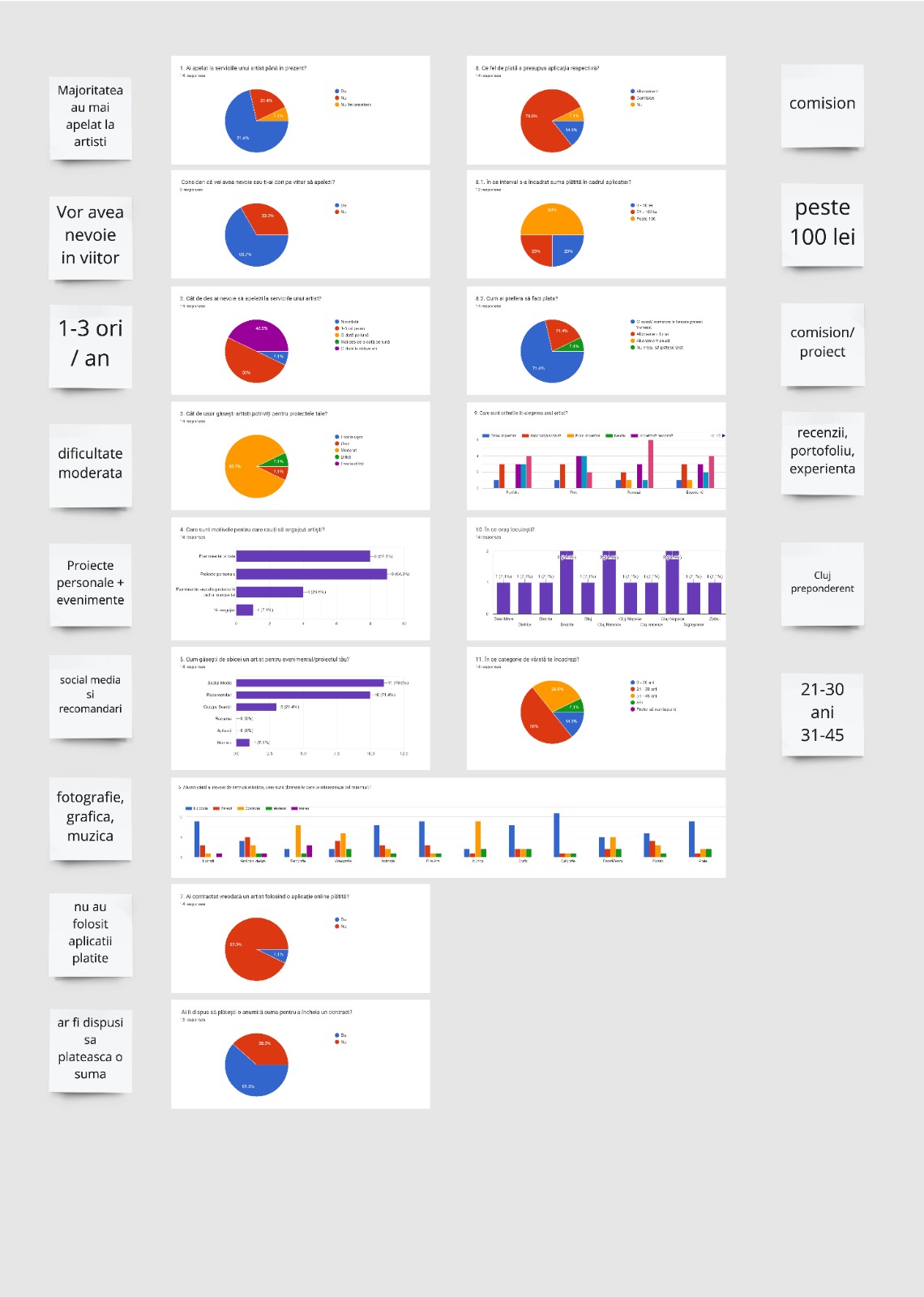
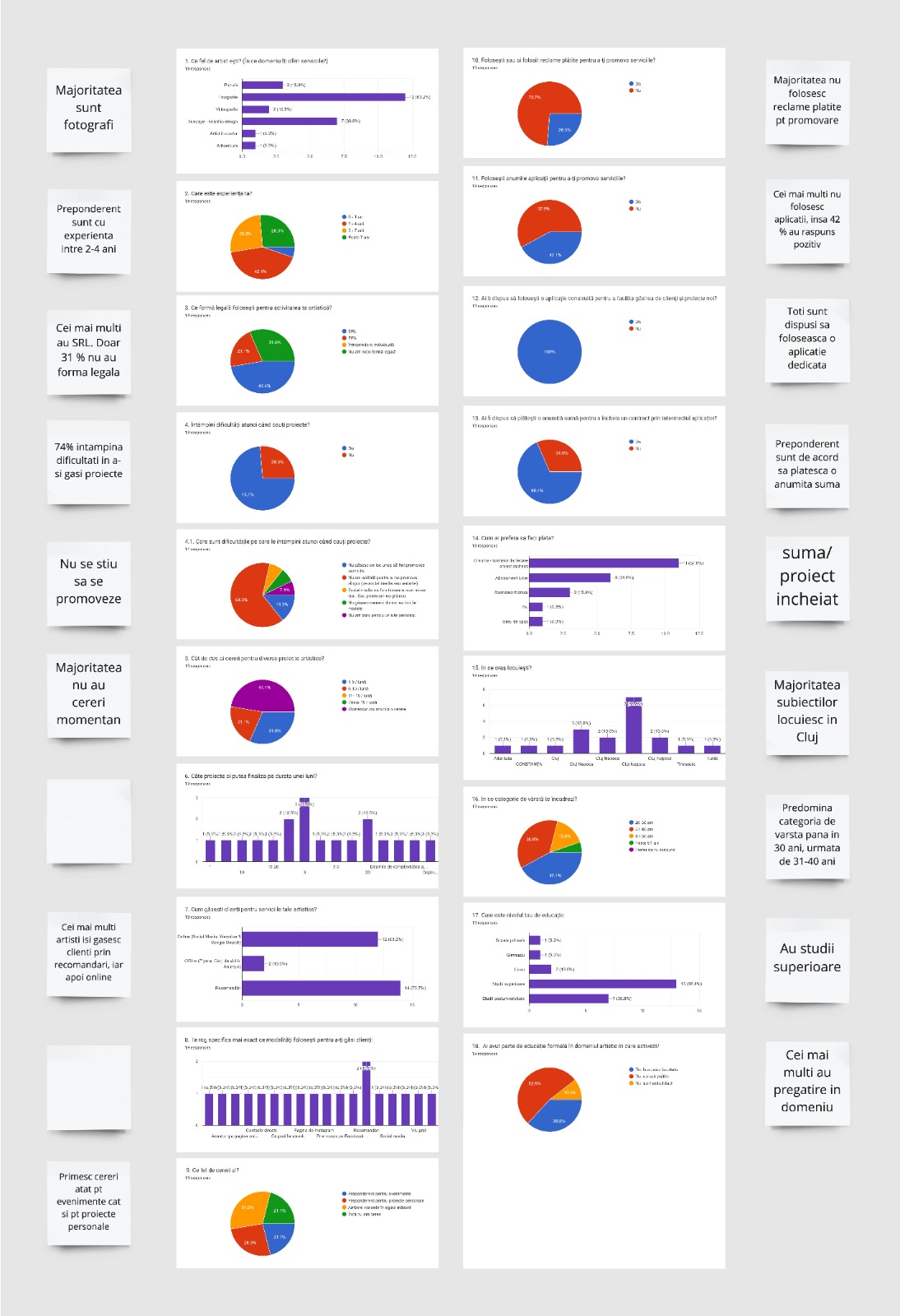
I outlined two focus groups: artists from various fileds and art consumers, potential clients who need artistic services. For the interviews I had 10 participants (5 for each group), and for survey 19 artists and 14 clients.
This research was conducted to find the major pain-points of the users. After that, I came up with the following research problem statement: I wish to create a user-friendly digital experience for artists and art consumers. I wish to explore the user needs, motivations, challenges and pain-points.
Based on the research problem statement I formulated the following research questions:
How do artists who find it hard to promote themselves experience working and talking to clients?
What are their needs, pain-points and challenges when trying to find clients/projects?
What could be their goals for using an app to support the communication with potential clients?
What is the art services buyer experience with finding an artistic service?
What kind of art services, does the art services buyer have the most difficulty finding?
How people are currently finding artists for their specific needs?
The main findings are:
Most artists find their clients through recommendations.
All users would be willing to use a dedicated application.
Reviews, portofolio and experience are very important in order to choose an artist.
Most users would be willing to pay a certain amount of money.
The app should be very well organized and easy to use.
Defined categories, visible prices, reviews, chat.
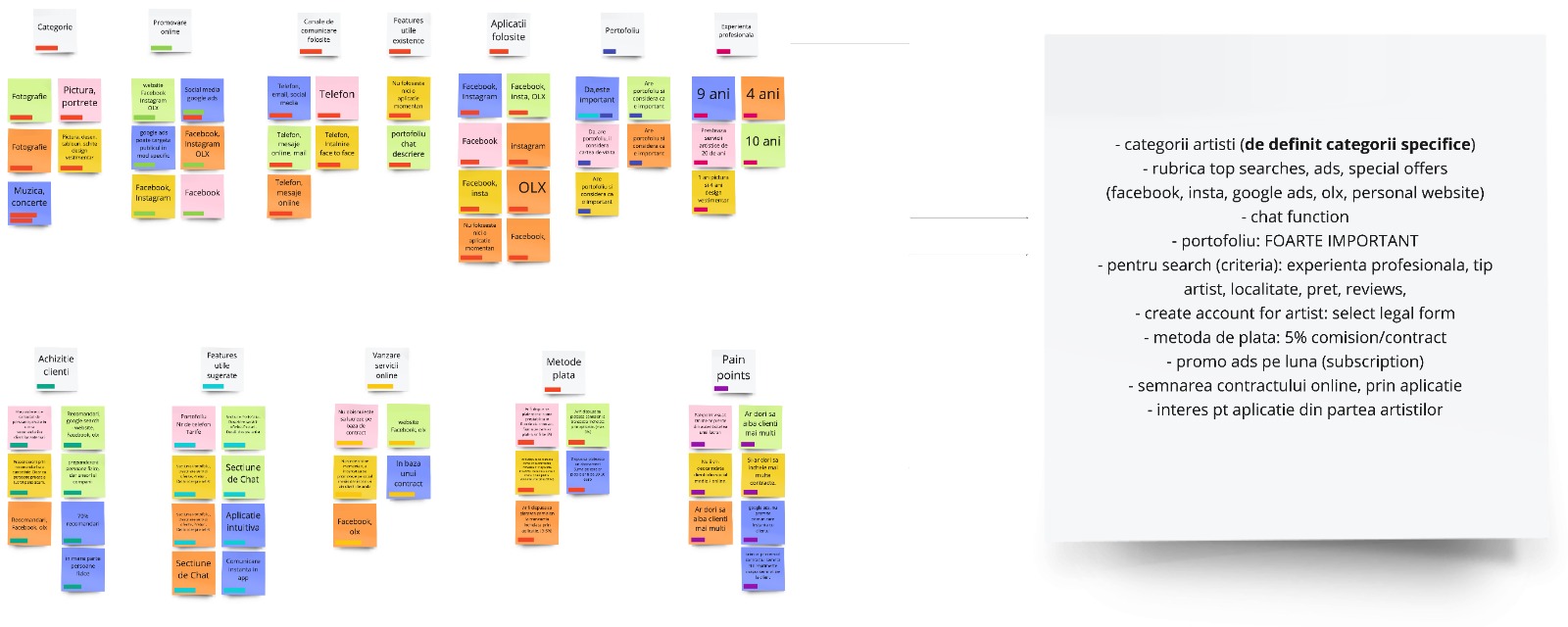
Affinity Diagram
From the user interviews, during the empathize stage of our project, I looked for patterns in notes and observations. In this way I was able to discover pain points, and develop problem and hypothesis statements.
Previous
Next
Previous
Next
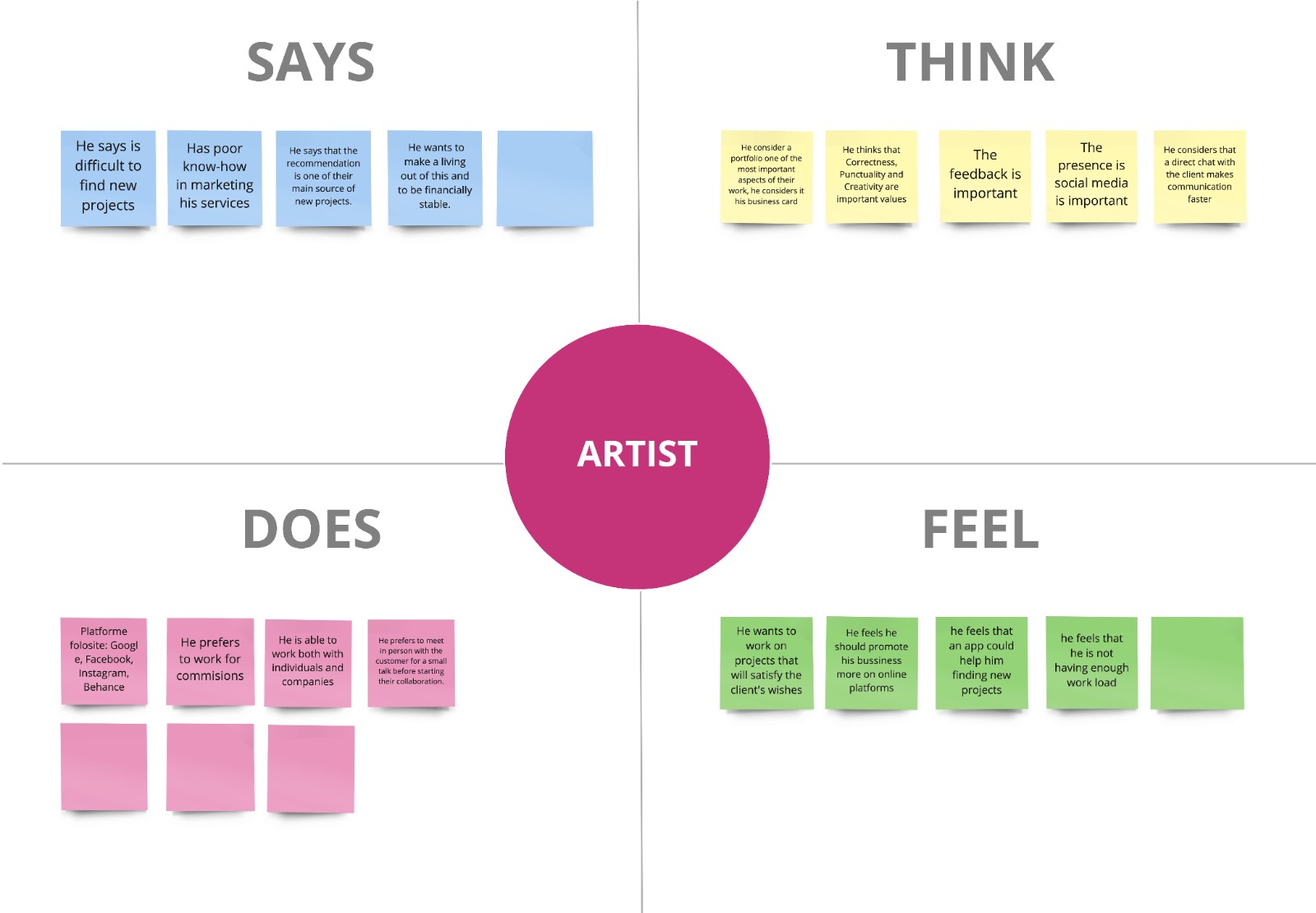
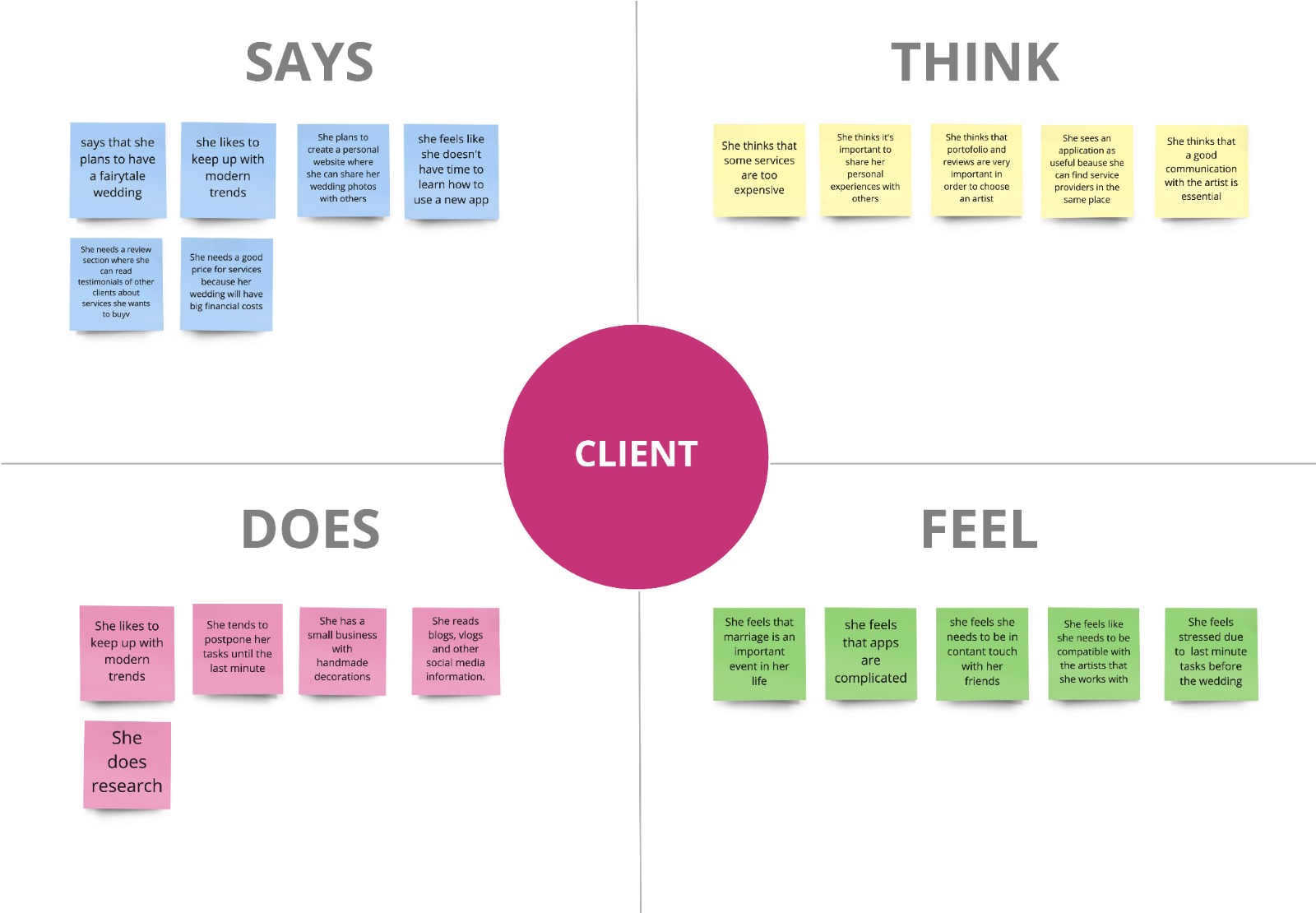
Empathy Map
In order to have a better understanding of user needs, goals and pain-points, I created two Empathy Maps.
I mapped their thoughts, statements, feelings and activities.
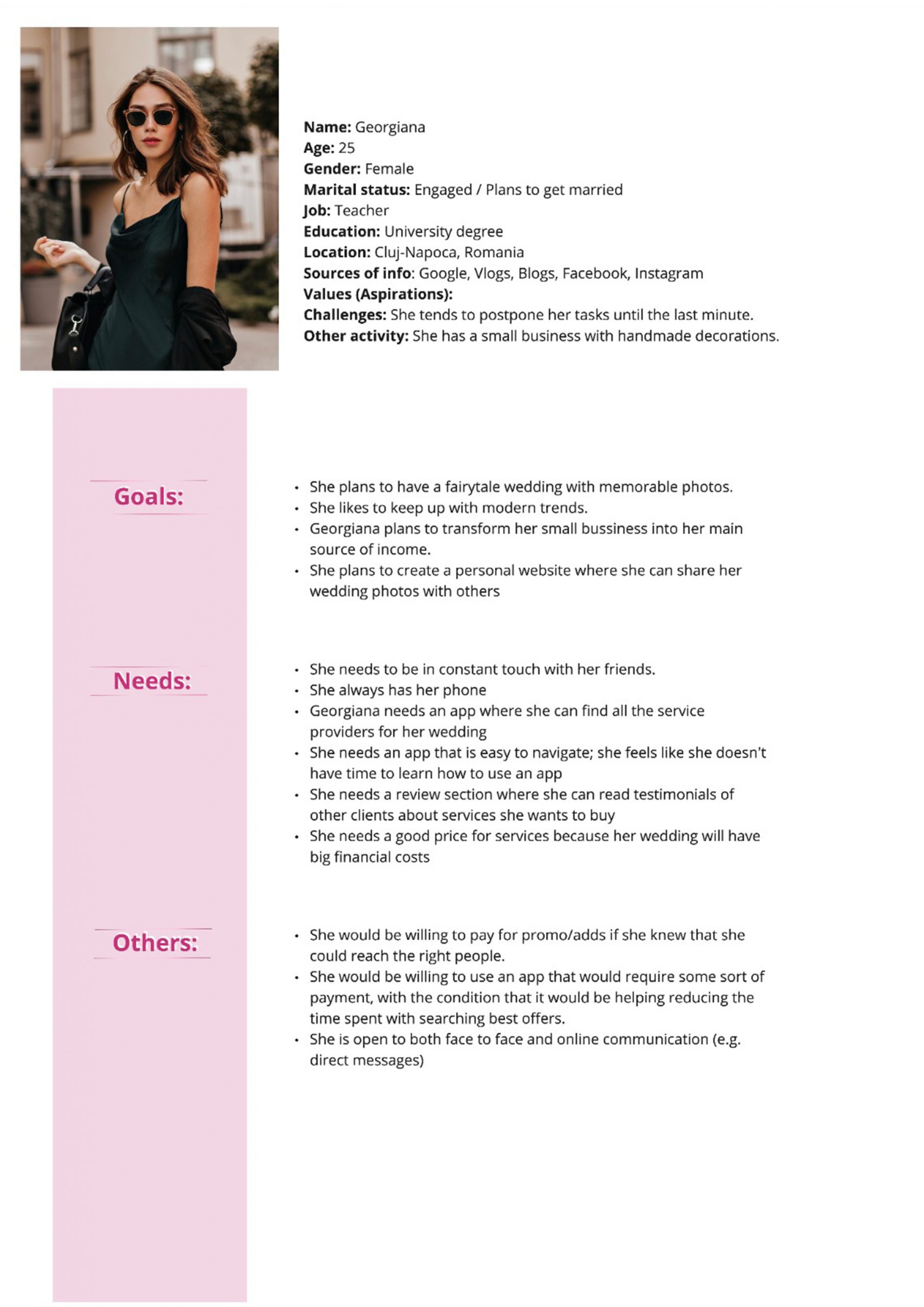
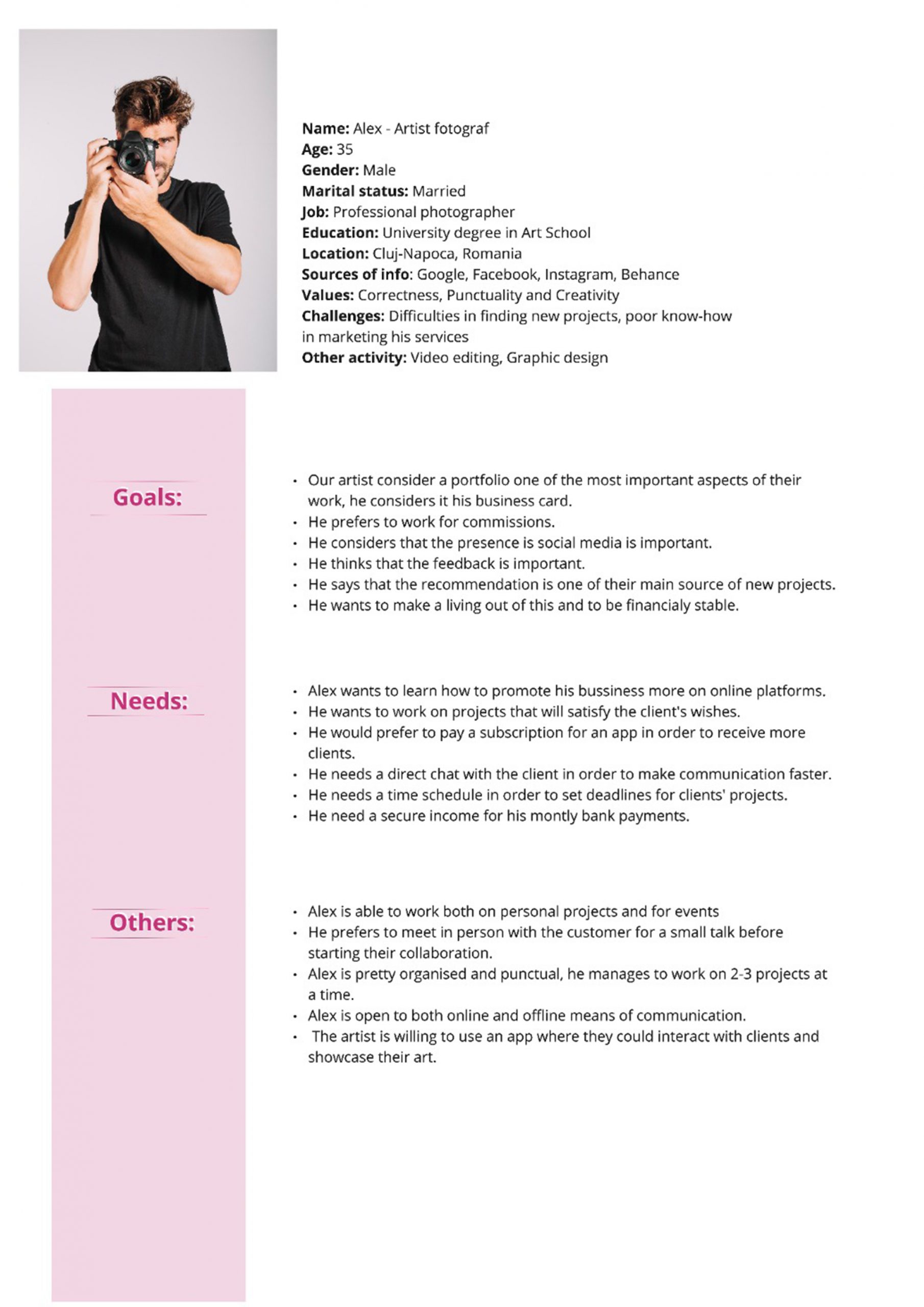
Personas
Based on the Empathy Maps, two personas were created in order to understand the users’ needs, experiences, behaviors, pain-points and goals. All this will help me to outline the product strategy, to design a product that will satisfy users’ needs and therefore be successful.
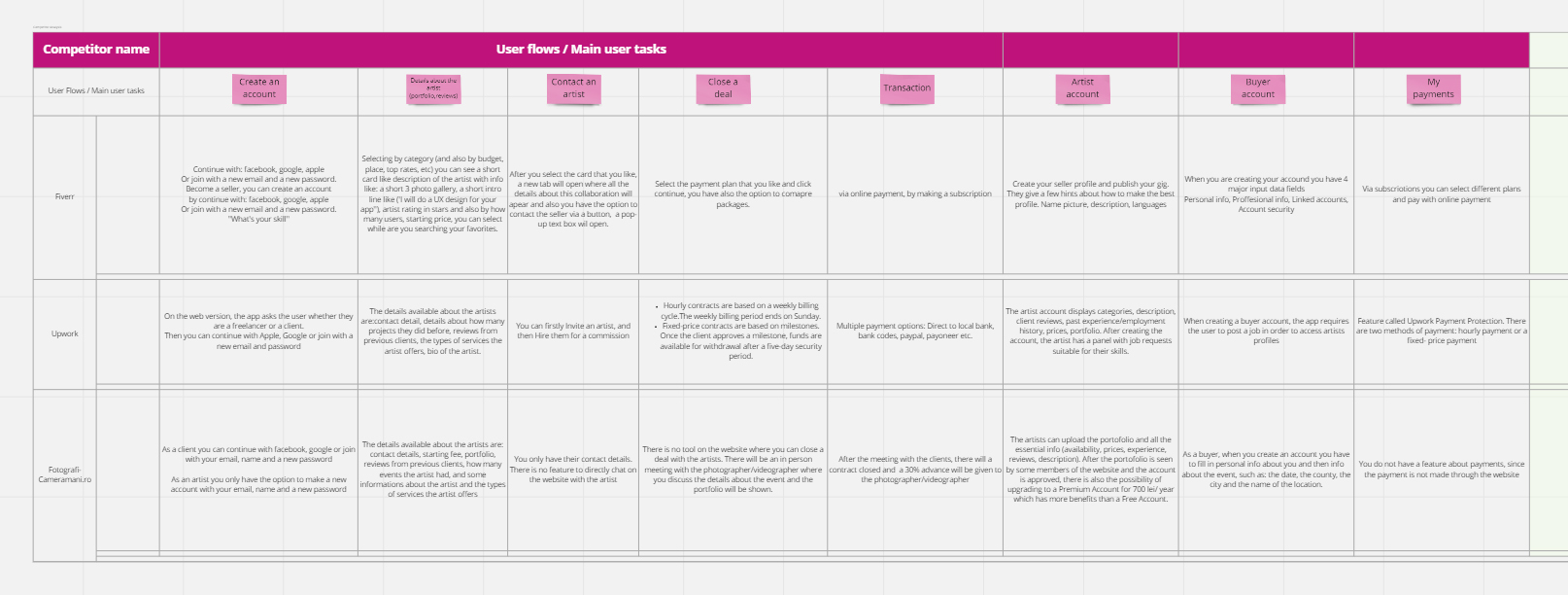
Competitors Analysis
At this point I tried to understand market trends and learn about similar platforms.
I identified the key competitors, and review the products they offer.
From the analysis of the competitors, I was able to get a much clearer idea of what I would like to create, what works well and what doesn’t.
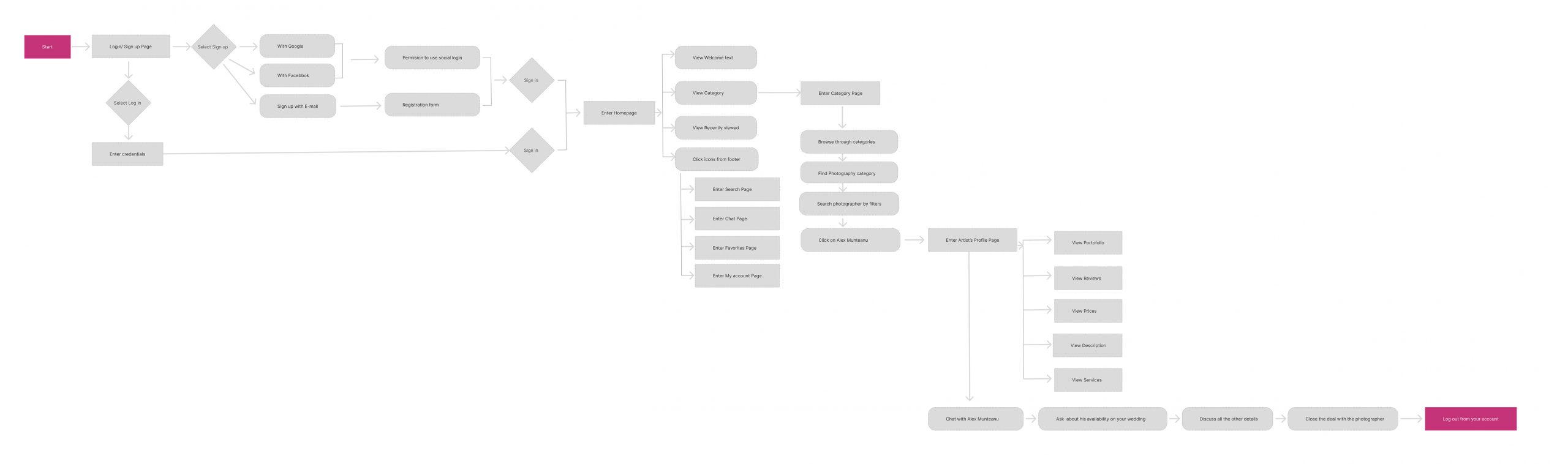
User Flows
Based on the two user personas, I created a set of features in accordance with the needs and pain points identified.
I tried to understand and anticipate the cognitive patterns of the users in order to create a good product.
Below is not the complete path a user takes when using a product, but a piece of interaction of a client when he search for a photographer.
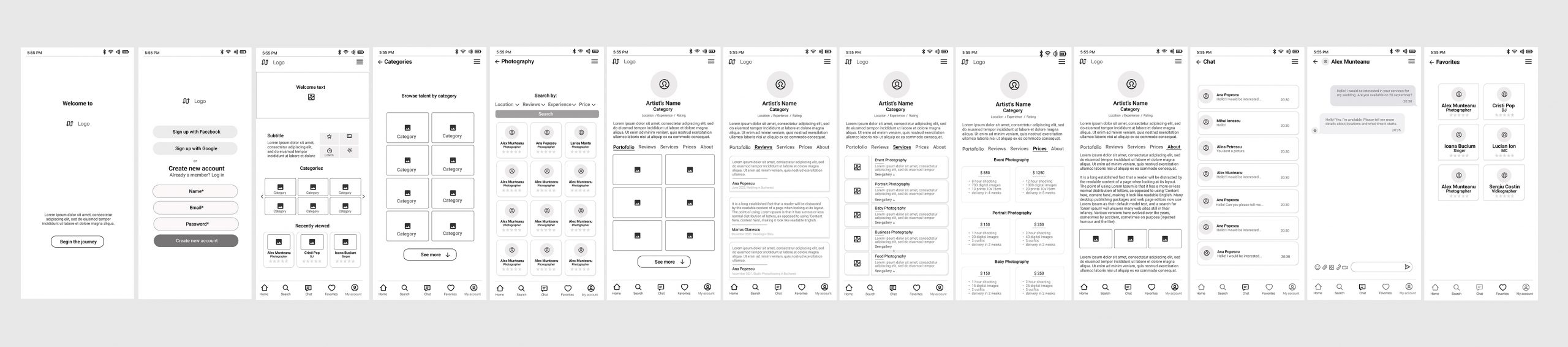
Wireframes
After I decided the user flow, I started creating the screens.
Design System
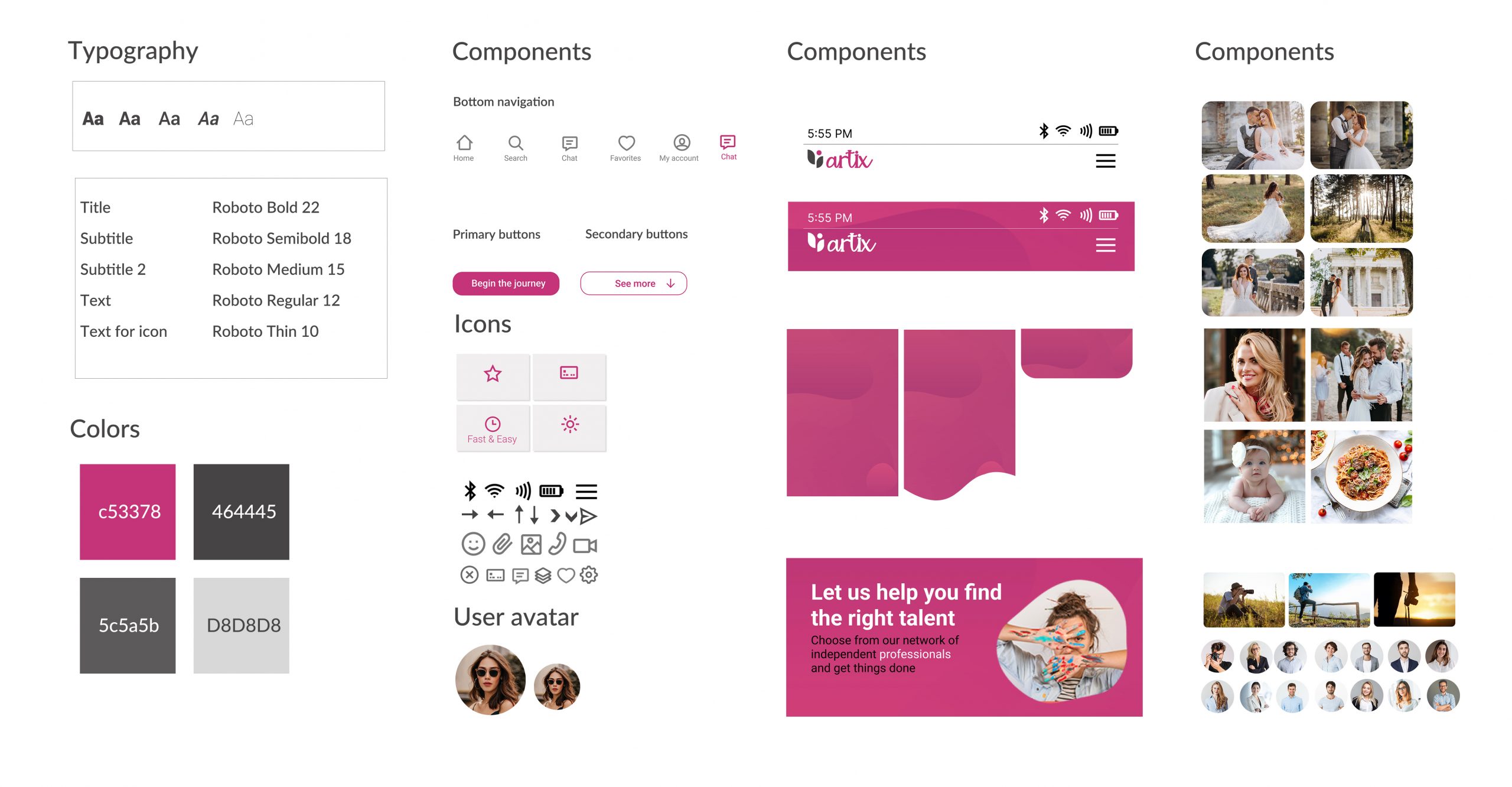
Before starting to create high fidelity wireframes, I decided on a design system to help me maintaining visual consistency. I wanted to create a clear, easy to use interface, with a pleasant and minimalist design.
Prototype
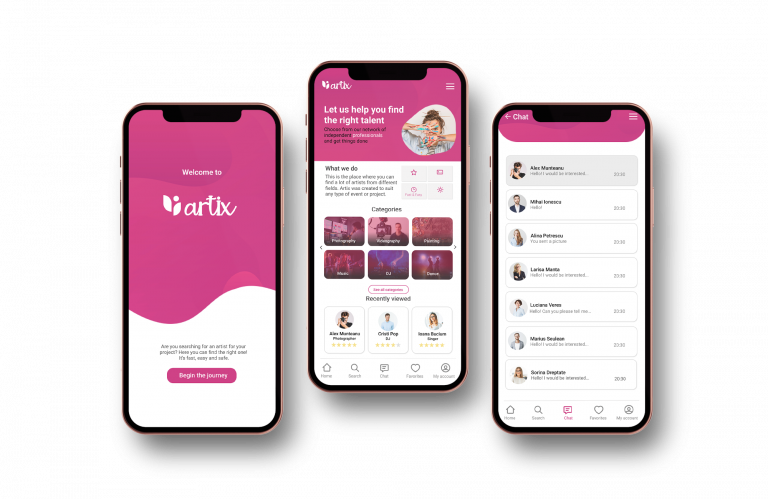
Finally, I created the high fidelity prototype for the task flow i chose, when a client is searching for a photographer, studies his profile, portofolio and reviews and than chat with him asking some details.
 The problem:
 The solution: